Planning a bathroom remodel? This walkthrough offers United States homeowners easy-to-follow, plumbing-first direction. It will help you plan a well-run home renovation that holds up. You’ll find practical recommendations on bathroom makeovers and plumbing planning, keeping costs in check, and water-smart improvements – Visit the site about bathroom remodeling.
We advise partnering with Renovate Builders or a qualified plumber for code-correct installation and accurate quotes. Licensed pros spot hard-to-see defects—like moisture damage inside walls—and reduce pricey missteps. These kinds of errors can easily double a project’s schedule.
Across the article, you’ll get guidance on pre-planning, assessing current plumbing limitations, and selecting fixtures and fittings and surfaces. You’ll also get best practices for shower, tub, and toilet installation. There are easy electrical, lighting, and ventilation tips to make sure your bathroom safe and comfortable.
As a next step, arrange a site visit and a plumbing review with Renovate Builders or a trusted local licensed plumbing professional. Expect the unexpected: set aside a 10–15% reserve. Also, know that relocating fixtures typically increases both cost and time.
Key Points
- Begin with a site inspection and plumbing consultation to define scope and costs.
- Bring in Renovate Builders or a licensed plumber for code-correct, quality work.
- Include a 10–15% contingency for hidden water damage or unexpected issues.
- Relocating fixtures or drains raises time and cost.
- Balance looks and function by planning plumbing before demolition.
Planning Your Bathroom Remodel With Plumbing In Mind
Smart prep can help you save stress and expense when remodeling your bathroom. Start by closely reviewing your space and pinpointing what you need. Small bathrooms require careful decisions to fit everything with comfort.
Assess Your Space And Define Renovation Priorities
Check how well your bathroom is laid out, its storage, lighting plan, and flooring. Decide if you want to keep your tub, convert to a walk-in shower, or add a dual vanity. Use reference photos to evaluate and decide without hurrying.
Set a budget with well-defined must-haves. That way, you can prioritize the must-haves up front and save the upgrades for later.
Understand Current Plumbing Restrictions And Layout Implications
Find out where your drain lines, vent stacks, and water supply runs are before start planning. Moving a toilet or bathtub can be costly because it might require opening up the floor or walls. Staying with things in place can lower the budget and prevent big structural changes.
Verify your pressure and the condition of your pipework. Aging pipes might not work well with updated fixtures and could require replacement.
Permits, Codes, And The Value Of A Licensed Plumber
Many areas require permit approvals and inspections for plumbing changes. Using the correct drain sizing, the proper slope, and easy-to-reach isolation valves is critical. A licensed plumber knows the local code and can help avoid costly mistakes.
Partnering with a pro team like Renovate Builders or a licensed plumber helps ensure your work is completed correctly. Always keep a 10–15% budget for unplanned expenses like a spongy floor or mould.
- Document existing plumbing locations with pictures and drawings.
- Question contractors about permit responsibilities and inspection scheduling.
- Think ahead for future needs like support bars or comfort-height models to save on redo costs.
Bathroom Remodeling & Plumbing
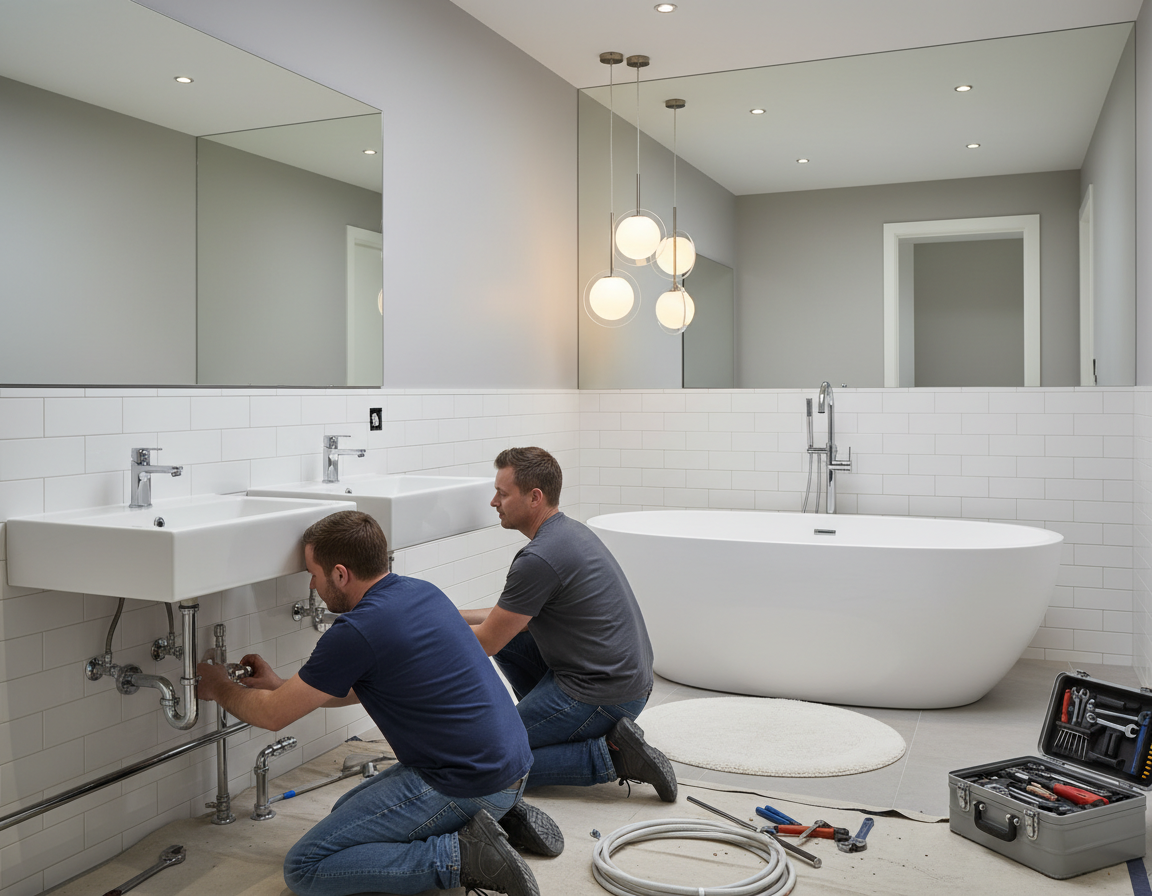
Quality plumbing comes from a clear plan. Before any tear-out begins, finalize the plumbing layout and review it with your licensed plumbing pro. This step prevents surprise openings in the walls and helps keep drains at the correct slope. Turn off the main water supply before work to avoid water damage and delays.
Plan Plumbing Layout Before Demo
Confirm fixture locations, venting routes, and drain runs early on. A well-planned plumbing layout cuts time during rough-in and reduces later repair costs. Plan access openings and service needs so pros can access valves and junctions without ripping out finishes.
Upgrade Pipes And Valves
Outdated galvanized or polybutylene water lines should be swapped out with newer materials like PEX or copper pipe when you can. A piping upgrade boosts reliability and overall water quality. Install shut-off valves at every fixture; good ball valves or quarter-turn valves make maintenance easier and lower the risk of leaks – Info here about bathroom remodeling.
Water Pressure, Flow, And Water Heater Factors
Check existing pressure before installing low-flow heads. Some high-efficiency fixtures need solid pressure to work properly. For consistent temp under changing demand, look at thermostatic valves; they keep set temperature better than simple pressure-balanced valves.
When you want multi-head showers, a big soaker tub, or floor heat, check the water heater’s FHR. A bigger first-hour rating or a tankless unit may be required to cover hot water demand. Upgrading plumbing can reduce strain on septic or sewer systems and improve long-term results.
- Make sure shower pans and drains have proper slope for drainage.
- Choose modern piping standards and include access panels for maintenance.
- Partner with Renovate Builders and licensed plumbing pros to size up pipework and venting properly.
When you need full-service support, look for plumbing contractors that sync remodel schedules and material choices. Clear communication between the homeowner, contractor, and plumber keeps projects on track and limits last-minute problems.
Design Choices That Balance Style And Function
Great bathroom design blends style with everyday function. Start by selecting fixtures and materials that fit your plumbing setup and day-to-day use. Making smart choices can prevent future repair needs and help keep your space looking fresh.
Choosing fixtures is about more than appearance. Choose WaterSense faucets and two-button dual-flush toilets to save water and lower plumbing strain. High-end faucets, lit taps, or touchless units might require extra electrical work or in-line filters. Measure your sink replacement carefully to fit your counter and tap sizes.
Fixture Selection And Impact On Plumbing
- Confirm pressure and flow before selecting waterfall spouts or rain showerheads.
- Bidet seats and heated seats often require additional plumbing work or extra wiring.
- Opt for models with easy-access valves and swappable cartridges for simple upkeep.
Layout Tips For Primary And Small Bathrooms
- In a master bath, aim for 36–42 inch pathways. Dual vanities with 36 inches between basins are easy to use.
- Separate toilet cubicles increase privacy without burning a lot of space.
- For small bathrooms, use light colors, big mirrors, pocket doors, and wall-mounted or corner sinks to open up floor space.
- Built-in shelf niches and recessed medicine cabinets add storage while keeping the floor open.
Materials For Durability In A Wet Environment
Pick materials made for bathrooms that can cope with humidity and wear. Porcelain and glazed tiles work well for flooring and shower surrounds. Quartz and granite tops fight staining without needing regular resealing.
Use slip-resistant or smaller tiles for more traction and anti-mold grout in wet zones. Glass panels, large-format stone, or enamel-on-steel panels are solid for wet walls. Radiant floor heating improves comfort and pairs nicely with a programmable stat for saving energy.
Where to spend: prioritize hard-wearing floors, proper ventilation, and good fixtures. Spend less on hardware, mirrors, or non-essentials. Renovate Builders can help select materials that balance price, durability, and style.
Shower, Tub, And Toilet Installation Best Practices
Plan your fixtures and plumbing early on to prevent expensive changes later. Correct shower installation and smart shower valve selection are key. Know when to refinish a bathtub and when to replace it. Choose toilets that match your bathroom’s space and look at taller-height toilets for future comfort.
Shower drainage & slope
Make sure the shower pan pitches toward the drain to stop pooling. Comply with local code for drain sizing and slope. Use waterproofing layer behind the tile and inspect joints before setting tile. For curbless showers, design a careful slope to prevent water from running into adjacent rooms.
Valve selection and safety
Choose thermostatic valves for stable temperature, or pressure-balance valves for typical installs. Place valves for easy access and maintenance. Add niches and lights in the plan to store toiletries within reach and cut slip risk.
Bathtub refinishing vs replacement
Refinish tubs when the base is sound and only the finish needs refreshing. This saves time and money. Replace tubs when there is damage to the tub body, persistent leaks, or when you want a different style of tub like a soaking tub. Swapping tubs can require plumbing moves and drain changes.
Toilet selection & comfort-height choices
Choose models with great flush performance and WaterSense certification to cut water consumption. Comfort-height models, at 17–19 inches, help people stand with less strain and help with aging-in-place plans. Look at dual-flush or bidet add-ons to reduce paper use and lower bills.
Installation best practices
- Fit shut-off valves at every fixture for fast service.
- Add service panels to reach valves and controls.
- Have a licensed plumber confirm drain pitch and venting routes to avoid clogs and smells.
If the project gets complex, Renovate Builders can support you. Rely on their experienced crews for tight shower installs, correct valve selection, and reliable toilet repair. They will keep the project moving and aligned with code.
Lighting, Ventilation, And Electrical Upgrades
Smart bathroom design combines essential systems with style. Plan lighting, venting, and electrical upgrades at the same time. That way, each decision reinforces the others. Early planning avoids budget-busting revisions and helps keep the bathroom safe and pleasant.
Layered lighting for function and ambiance
- Use ambient, task, and accent layers to prevent hard shadows at the mirror. Place mirror lights at eye level, about 66 inches up. Use side sconces 36–40 inches apart. A linear fixture above the mirror is best when side mounting is not an option.
- Pick dimmable fixtures and warm colour temperatures (2700K–3000K) for a nice glow. Add strong task lighting near the shower and bathtub. Soft accent lights are great for shelf niches or trim details.
Proper ventilation to prevent mold & moisture damage
- Install a bathroom fan that fits the room’s square footage. Small baths need about 50 CFM. Bigger bathrooms or steam showers require more. Choose a fan that is sized correctly for good moisture control.
- Look at humidity-sensing fans and timer controls that run 20 minutes after use. Ultra-quiet models are ideal for master suites, reducing mildew and preserving finishes.
Electrical safety and outlet planning
- Put GFCI receptacles where required: near sinks, within tub proximity, and for devices. Plan hidden charging spots in vanity drawers to keep counters clear and charged.
- Upgrade wiring when needed and add dedicated lines for high-draw features like floor heat or towel warmers. A 20-amp circuit is wise for multiple hair tools. Partner with licensed electrical contractors and Renovate Builders to hit code and keep installs safe.
Simple choices go a long way. Put first a low-noise fan and GFCIs. Map lighting zones early on and verify circuit load before adding floor heat or towel warmers. Partner with Renovate Builders and a licensed electrical pro to confirm locations, wiring, and ventilation. This way, your bathroom will work brilliantly for many years.
Cost Management, Green Upgrades, And When To Hire Pros
Planning is essential to a successful bathroom upgrade. Start with a solid budget and be ready for unexpected issues. A 10–15% contingency can handle unplanned problems like rot, mold, or plumbing repairs.
Collect pricing from nearby plumbers to compare cost. This helps you make an informed decision.
Budgeting, Unexpected Costs, And Smart Splurges
Altering fixtures or moving drains can increase costs. Fixing pipes or water damage can add to the total. Invest on long-lasting floors, a strong ventilation system, and quality plumbing work to save in the long term.
Cut costs on cosmetic pieces like hardware, mirrors, and light fixtures. Weigh the long-term value of replacing a basin or tub instead of restoring them.
Eco-Friendly Choices That Lower Bills
Little upgrades can make a big difference. Choose WaterSense faucets, showerheads, and toilets to save water and cash. Consider tankless heaters and more natural light to cut down on energy use.
Choose recycled-glass tile or natural finishes for a greener bathroom. If permitted, a greywater system can reduce on water costs.
DIY Vs Hiring Renovate Builders And Licensed Plumbers
Do easy jobs like painting and fitting hardware yourself. But, save complex jobs like moving fixtures and pipe replacements to the professionals. They require expert skills and permit approvals.
Hiring Renovate Builders and licensed plumbing pros helps ensure your project meets code. For complex layouts or long-term reliability, hiring licensed pros is worth it.
Arrange a plumbing consultation early on. A quote from Renovate Builders or a qualified plumber helps you build your budget. It helps ensure your bathroom remodel moving smoothly.
Conclusion
Planning is the key to a durable bathroom upgrade. Begin by evaluating your current space and setting clear objectives for style and function. It’s also a good idea to bring in a licensed plumbing pro from the beginning to prevent surprises.
Measure your water pressure and inspect your supply lines. Prepare for any pipe and valve improvements required. This helps ensure your updated fixtures perform well for many years.
Choose durable materials and proper ventilation to help keep your bathroom looking and feeling great. Consider thermostatic valves for stable temperature control and WaterSense products to cut water use. Remember to keep a 10–15% reserve for unexpected costs.
Balance the budget on must-haves with saving elsewhere to get the most for your spend. This way, you’ll enjoy your new bathroom for years.
For a smooth project, hire a licensed plumber and a trusted company like Renovate Builders. They can help with permits, make sure everything is built properly, and safeguard your investment. Reach out to them for a clear plan and pricing for your bathroom remodel.
Related: Bathroom Remodeling in Redmond: Ventilation and Moisture Control